Popular Searches:
Recommended Posts



Search Results


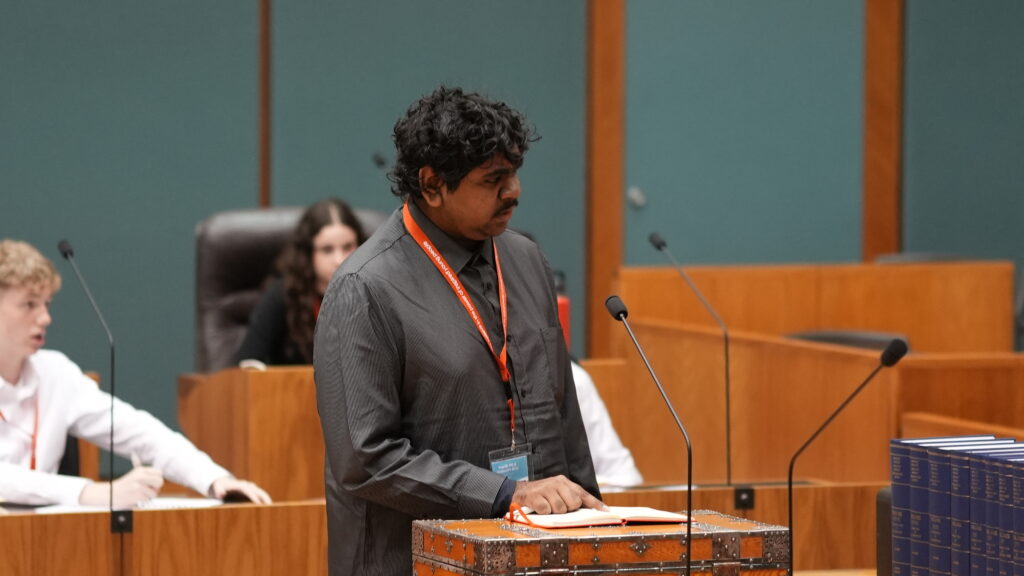
Chris Sampson was 16 years old when he stood inside the NT’s Legislative Assembly and spoke for a group of young people most rarely think about, let alone know.
Young carers.
Across the country, more than 391,000 Australians under the age of 25 help care for their parents, grandparents or siblings living with disability, illness, mental health conditions or age-related decline.
Many have to balance schoolwork, jobs and friendships alongside responsibilities most would struggle to face: cooking, cleaning, helping people to move around the house, administering medication or providing constant physical and emotional support. But despite the scale of these responsibilities, many young carers remain an invisible part of society.
For Chris, that feeling of invisibility is something he has understood well for a while now. Since around 2020, he has helped to care for multiple members of his family. His mother still struggles with mobility after a serious car accident. His grandmother often needs assistance moving around the house and often becomes disoriented. His grandfather, who was diagnosed with Alzheimer’s and dementia, required near-constant support before eventually entering a nursing home.
“I used to care for him 24/7 [and] I had to constantly be on watch,” Chris said.
“Knowing that I did my best that I could for my grandpa, I just [had] to keep going”
Describing just some of his duties, Chris said much of caring comes down to the small responsibilities repeated constantly throughout the day.
“Picking up items, doing the dishes, helping them with their clothes [and] folding their clothes, assisting with walking. You have to be there just making sure that everything’s okay.”
“You’re not just standing still, you’re constantly supporting and helping.”
Chris officially joined the Young Carers program in 2022, although he said caring had already become a huge part of his life long before then.
“Ever since I was young, I’ve always wanted to support my friends and family,” he said.
Caring responsibilities have been consistently linked to higher levels of stress, poorer mental health outcomes and disruptions to education. But for Chris, one of the hardest parts of being a young carer is how little most people actually understand about the role itself.
“Most of them don’t [even] know what a young carer is,” he said of schools and teachers.
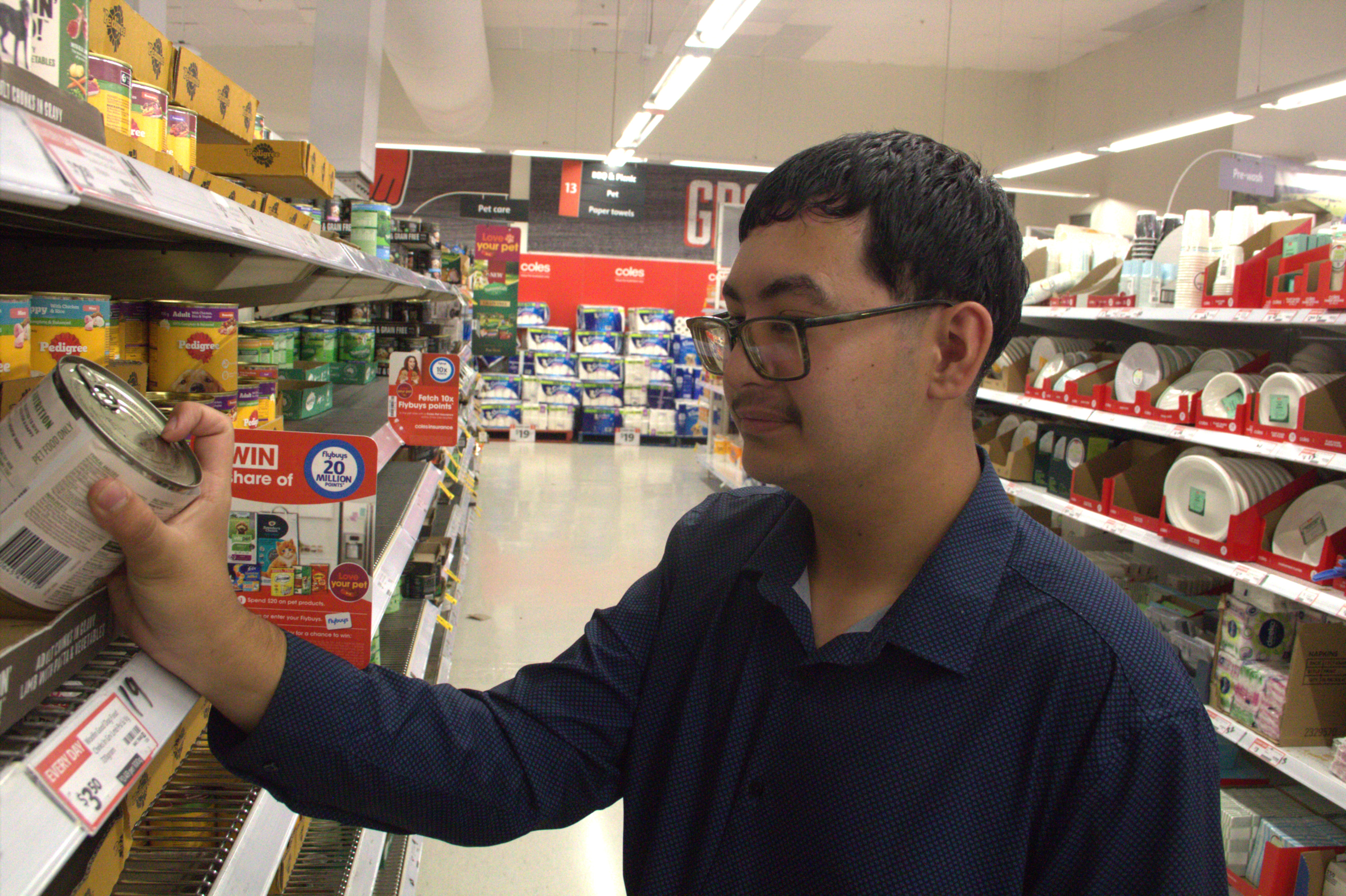
Like many young carers, Chris said balancing responsibilities at home alongside school and social life can become overwhelming; constantly thinking about responsibilities waiting for him back home, even while trying to focus on other parts of his life.
“You sort of get that kind of [compulsion] where you have to be there.”
“I was always wondering what would happen if I wasn’t there.”
He also said that caring responsibilities had greatly affected his friendships, personal relationships, and his ability to focus on his education.
“Sometimes your brain is overworking and overthinking, like ‘Oh wait, I need to do this,’ but then I also have something else I have to do at that exact same time.”
For many young carers across the Territory, those nonstop pressures often remain hidden from the people around them. Many continue going to school each day without classmates or teachers ever realising what waits for them once classes end. And when they do, many feel pressured to explain deeply personal parts of their lives to people who don’t fully understand the gravity of what they are asking.
“There are a lot of people that really want to push and know everything about your personal life, [it causes] a lot of mental health issues.”

Seeing the experiences of other young carers around him is part of what motivated Chris to speak publicly for and about those enduring the same during last year’s Youth Parliament. Standing inside the Legislative Assembly, he advocated for stronger support systems surrounding education, mental health and employment opportunities for young carers and vulnerable young people across the Territory.
“There’s a lot that the government can improve on. There needs to be a lot more education for the entire youth community because I know there are a lot of people struggling.”
For Chris, programs like Youth Parliament and Young Carers represented more than just leadership opportunities; they provided a way for him to better understand himself as a person and gave him confidence to speak publicly about issues affecting other young people.
“It can make you feel like you can actually do something.”
What stands out most about Chris is not simply the responsibilities he carries, but the way he carries them. Even while privately juggling huge pressures at home, he remains consistently optimistic around the people surrounding him. He checked in on others, encouraged people during speeches and constantly tried to make everyone feel included. But he admitted that maintaining a positive outlook is not always easy.
“There’s a lot of emotions at play,” he said. “Sometimes I feel sad.”
Still, he said understanding that it wasn’t just him but also many other young people that were experiencing the same hardships and struggles as him helped him to continue moving forward.
“Once I realized that it’s not just me who’s going through that heartache, it’s also others”
That resilience now shapes what Chris hopes to do in the future, wanting to continue advocating for vulnerable young people across Darwin and eventually move further into leadership.
“I was thinking of going down the youth leadership role, advocating not just for the youth, but [for] the elderly around Darwin as well.”
At the same time, Chris believes much more support is still needed for young carers across the Territory, particularly within schools and within the education system. He emphasised that many young carers continue struggling silently without proper institutional support, while others are forced to sacrifice opportunities because of their responsibilities at home.
“There should be a lot more support regarding the young carers and the youth. There should be more employment services and more opportunities.”
Chris hopes in the future that all young people will be supported more fully by the government, wishing to have an impact on policy and help those around him through his continuing advocacy.
“I would ask them what their goals are for the youth community and younger generations, [because] I feel there’s a lot more [they] can do.”
Programs like Young Carers, however, have helped Chris maintain some balance between his caring responsibilities and his own wellbeing. Through respite programs and social support services, he said that he has been able to take a break while knowing his family was still safe and supported.
He believes there are many young carers across the NT whose responsibilities remain unseen despite carrying pressures that would overwhelm the best of us. Yet every day, many still continue showing up to school and for their families, trying to build a better future for themselves and their community all at the same time.
“There are plenty of unrecognized people that have a lot of struggles in life,” Chris said. “But you can spread a message of kindness and hope and inspire others to keep going.”
“There needs to be a lot of kindness and a lot of hope.”